

São Paulo’s new independent music scene is made up of at least 228 emerging bands and solo artists, all producing original music and performing across 72 live venues spread throughout the city and its metropolitan area.
Most of these stages are concentrated in the West Zone, but anyone willing to explore will find places to hear great music in every part of the city, as well as in neighboring towns across the metropolitan region.
This map does not aim to be definitive. It is a snapshot of a living, expanding scene, constantly shifting and reinventing itself.
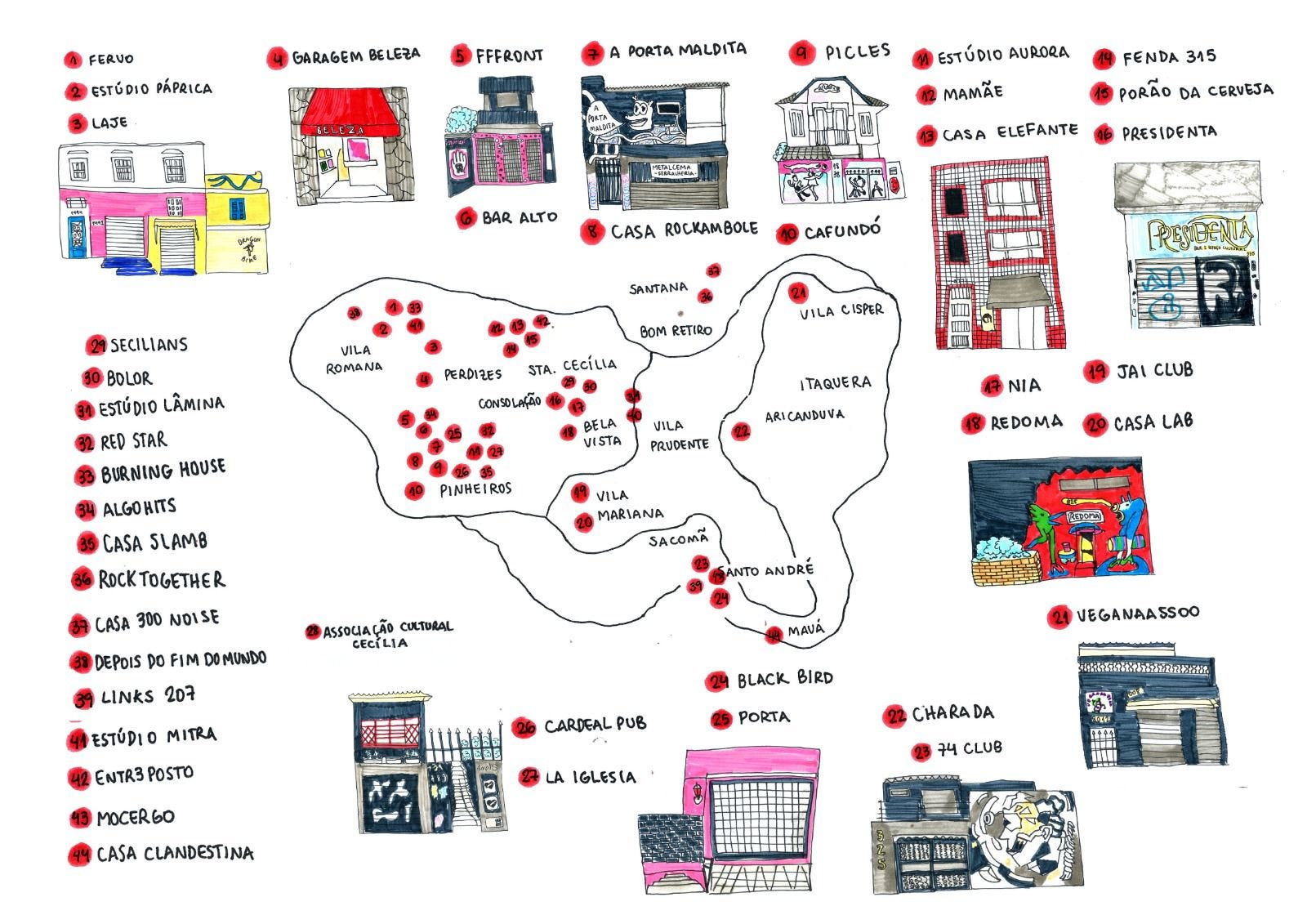
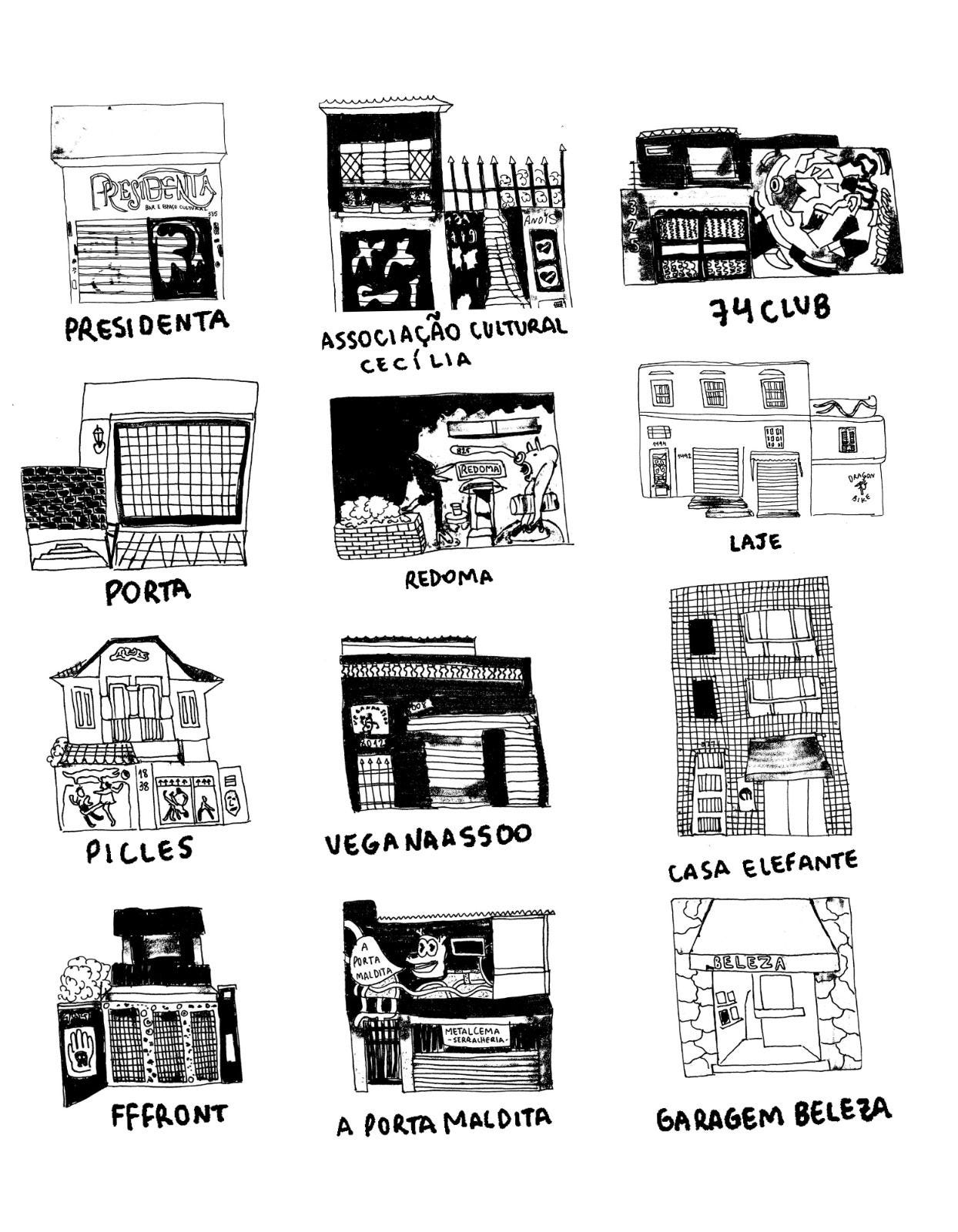
👉 [Download the illustrated map]
👉 [Google Maps with all venues]
👉 [Full list of São Paulo bands with up to 5 years of activity]
How were the bands selected?
I chose to map only bands with up to five years of activity, based in São Paulo, for a simple practical reason: it is impossible to map the entire country — or every active band — in a single project.
To be included, artists had to meet all of the following criteria:
Founded in 2021 or later
Based in Greater São Paulo
Producing original music
Currently active, either through live shows or recent releases
Who are these bands, and where do they play?
This survey may contain gaps and inaccuracies, but the numbers clearly point to steady growth in the formation of new bands from 2022 onward, when the pandemic began to fade.
The scene is stylistically diverse. The most common genres are rock, indie, MPB (Brazilian popular music), punk/hardcore, and emo. Whenever possible, I respected each band’s self-identification. When that wasn’t available, I listened to the material and classified it in the way that seemed most coherent.
As for live venues, there may be both a real geographic concentration and a bubble effect. Still, the data strongly suggests that São Paulo’s West Zone stands out as the city’s main hub for emerging independent artists.
Here is a playlist featuring all the bands that had music available on Spotify.
Now what? Suggestions for helping the scene grow
A few years ago, during a show by Hypnotic Brass Ensemble, the singer said something that stayed with me:
When you pray asking for something only for yourself, the line is long. When you pray for others, it moves much faster.
I don’t even believe in God, but the metaphor works.
Promote your own band — but also talk about your friends, your peers, and the artists you admire. Scenes grow through circulation, not isolation.
One of the oldest tricks in the music industry — now amplified by streaming — is collaboration. When artists share authorship, their music reaches both audiences. This applies to Spotify, Instagram, and live shows alike.
Keep your social media updated. Explain clearly what kind of music you make. Share easy-to-access links. In an attention economy, the harder you are to find, the easier it is to be forgotten.
Play live. While some artists break through on TikTok, live performance remains the most consistent way to build a lasting audience.
On stage, say your band’s name. Repeat it. Share your social handles.
How was this research done?
The starting point was a set of bands and venues I already knew. From there, I tracked where these bands played and who they shared stages with. This network of connections gradually expanded the list.
I also asked for suggestions on social media and discovered many new artists that way.
When the process began to stagnate, I turned to three different AI tools for two types of searches:
Bands that played in 2025 at venues already mapped
Bands that had shared bills with artists already identified
Even so, I know this map is far from complete. Dozens of bands across São Paulo are actively creating and performing, and I simply haven’t found them yet.
This spreadsheet will remain online as long as Google exists.